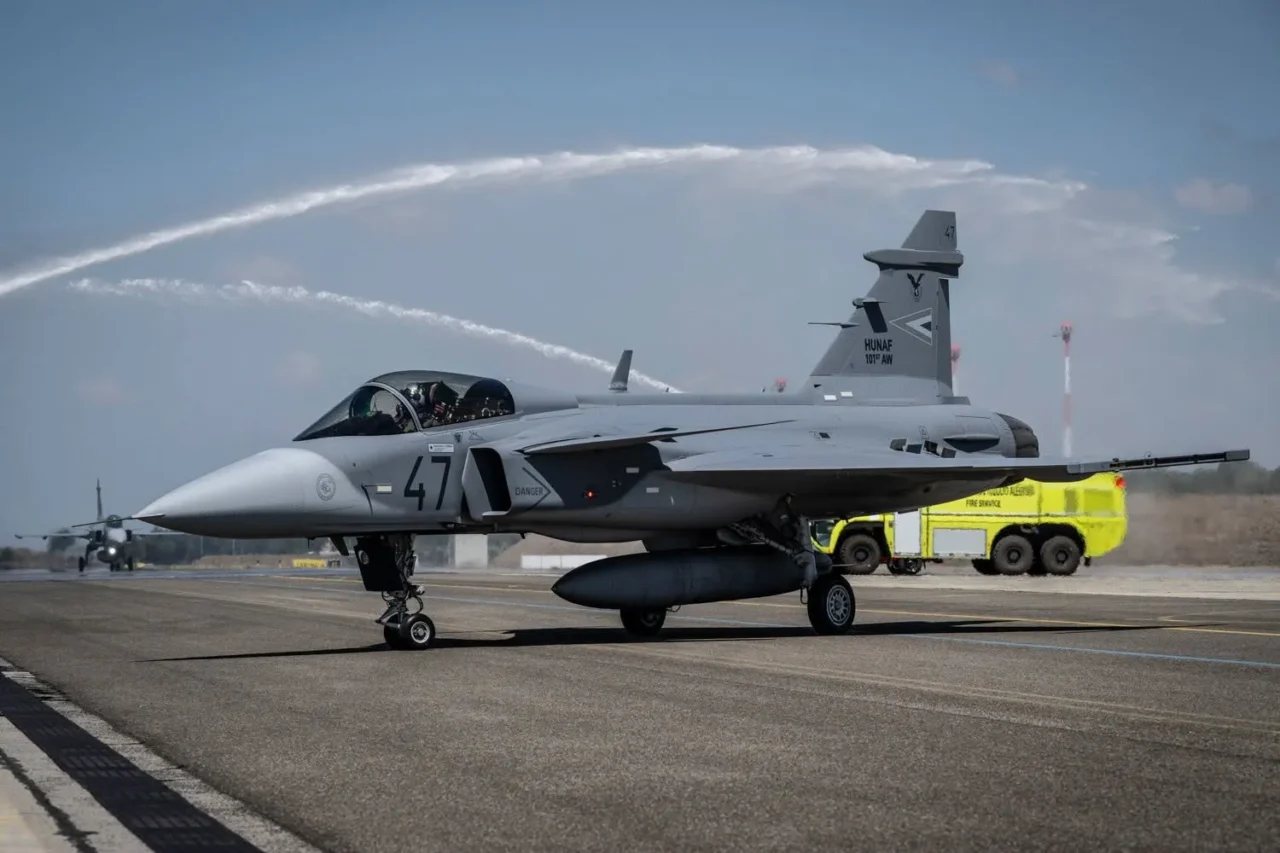
Hungary's defence minister has said the recent wave of bomb threats against passenger aircraft across Europe could be part of a coordinated campaign, as he set out why Hungarian Gripen fighter jets are scrambled when such alerts are raised.
Writing on Facebook on Sunday, Romulusz Ruszin-Szendi pointed to what he called the unusual frequency, geographical spread and timing of the threats, Daily News Hungary reported. In recent days dozens of flights across the continent have been diverted, searched or escorted by military aircraft; officials say no explosive devices were found and every affected plane landed safely.
Hungary scrambles Gripens within minutes
On Friday morning, Hungarian Gripens responded after bomb threats were reported against three civilian airliners, the minister said — a sequence detailed by the Hungarian news site 24.hu. NATO's air-defence alert service declared its highest-level "ALPHA SCRAMBLE" alert, and the fighters oversaw a Brussels–Sofia Airbus A321, a Prague–Cyprus flight and a Prague–Bucharest flight as they crossed Hungarian airspace. POLITICO reported the response, and the minister said NATO also ordered an air patrol near Hungary's border with Romania.
The pattern has been repeated across the continent. On Thursday, fighter jets were scrambled in France, Italy and Bulgaria as at least 16 flights were affected, Vatican News reported. The Associated Press documented threats against carriers including Ryanair, Wizz Air, LOT, SAS and Finnair. An earlier alert on 2 November forced a Wizz Air flight from London to Sofia to divert to Budapest, where a Gripen escorted it in, Xinhua reported.
Why armed fighters are sent up
The Gripens' tasks go beyond escorting a threatened plane, the minister said: crews identify an aircraft, verify its position and watch for any deviation from its declared route or failure to follow air traffic control. The jets are armed combat aircraft and, under strict legal and command conditions, may use force against an immediate threat from the air — but the minister stressed that a bomb threat or an unexpected change of course alone does not justify firing weapons.
He cited the 11 September 2001 attacks in the United States, when hijacked airliners were used as weapons, to explain why such readiness is maintained. Hungary keeps continuous air-defence duty as part of NATO's Integrated Air and Missile Defence System, he said, describing the take-offs as proof of a standing capability rather than a show of force.
No claim of responsibility
No group has publicly claimed responsibility, and no government has formally attributed the threats. Ireland's government said the incidents appeared to be part of "a coordinated campaign of disruption", according to POLITICO, while Spain's foreign minister, José Manuel Albares, described them as possible "hybrid aggression". Aviation-risk analysts at Osprey Flight Solutions told the AP that a coordinated campaign was "likely". European officials have previously accused Russia of waging hybrid attacks, which Moscow denies; the Kremlin has described the threats as "under-threshold warfare" designed to avoid attribution.
Not all officials are convinced the events are linked. The EU transport commissioner said it was too early to draw conclusions, the Guardian reported. Eurocontrol said bomb threats affected 14 flights on Thursday — roughly 0.05% of the about 26,300 flights in the European network that day.
Leave a Reply